| Please welcome today's guest host, Emmanuel Felton, who covers race and ethnicity on The Post's national desk. I first heard about Tullahassee, Okla., last year when Los Angeles Mayor Eric Garcetti announced the founding members of the Mayors Organized for Reparations and Equity coalition. The coalition was among many efforts emerging around the country to build out reparations programs for Black Americans affected by the legacy of American slavery and the century of anti-Black government policies that followed emancipation. Garcetti announced 12 founding mayors and Mayor Keisha Currin of Tullahassee immediately caught my eye. The coalition was mostly made up of big cities like Los Angeles and Denver, so I was interested in how Tullahassee, population 83, got involved in the project and what it was hoping to accomplish. Once I got on the ground, I learned about the town's rich history. Tullahassee was one of more than 50 all-Black towns founded in Oklahoma between the Civil War and the Great Depression. These towns recruited Black people to move there with the promise of an escape from the racial terrorism of the Jim Crow era, and they flourished in the years before Jim Crow made it to Oklahoma. But when Oklahoma entered the union in 1907, among the first acts of the legislature was the passage of Jim Crow laws. In addition, local banks refused to lend to Black businesses during the Great Depression. Then came fear after the government stood by and let a white mob ravage Tulsa's Greenwood district, then a prosperous Black enclave. All of those factors led to the decimation of these thriving communities. So, Tullahassee's vision for reparations is a little different than the other cities in the MORE coalition. Its residents were the victims of racist policies, not the perpetrators, and they are looking for funds to rebuild. 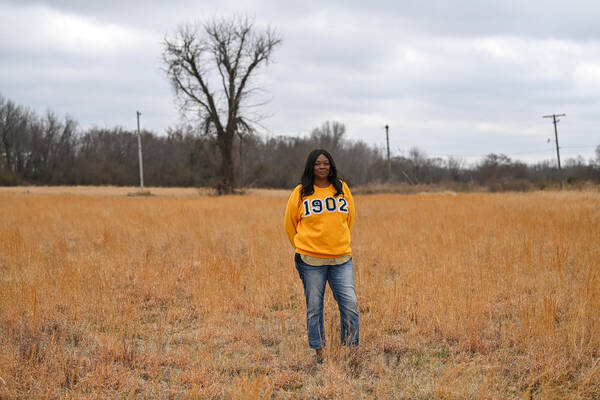 (Joshua Lott/The Washington Post) The once thriving all-Black town of Tullahassee, Okla., was ravaged by government policies that divested it and other Black communities. By Emmanuel Felton ● Read more » | | | |
A number to know 59.7 million The number of U.S. residents who lived in multigenerational households in March 2021 The number of Americans living in multigenerational households has quadrupled since the 1970s, driven by the rapid growth of Asian and Hispanic populations, a Pew Research Center analysis found. About a quarter of Asian, Black and Hispanic Americans shared housing with their nonnuclear family, compared with 13 percent of those who are White. Multigenerational households comprise two or more adult generations, or grandparents living with grandchildren under 25 under one roof. The popularity of the living arrangement also varies by age, with 37 percent of men ages 25 to 29 being more likely than young women (26 percent) to live with family. That changes among older Americans, with 20 percent of women living in multigenerational households compared with 15 percent of men. The analysis also found that poverty levels for those sharing housing are lower than for those in other living arrangements, indicating that multigenerational housing offers some advantages. According to the Pew analysis, financial concerns and caregiving are among the top reasons that families share housing. — Rachel Hatzipanagos |



 Email
Email 


Comments
Post a Comment