| Please welcome guest host Emily Guskin, polling analyst for The Washington Post. Happy birthday to the bat mitzvah, which celebrates its centennial this month! The bar mitzvah for boys existed for years, but in March 1922, Judith Kaplan Eisenstein was the first girl to have a bat mitzvah. She later wrote about the Friday night event where she read from the haftorah: "The institution of Bat Mitzvah had been born without incident." Less than 40 years later, my mom was the first bat mitzvah at her synagogue of mostly German Jewish immigrants on the North Side of Chicago in April 1959. It was a lot like Einstein's experience: At my mother's conservative synagogue, instead of reading from the Torah on Saturday like her brothers did at their bar mitzvahs, she read the haftorah from a book on Friday night. (The haftorah is a series of selections from the Book of Prophets and not that big Torah scroll people often associate with Judaism.) My bat mitzvah at our Reform synagogue was just like the boys'. I read from the Torah and the haftorah and helped lead the service on a Saturday in December 1996. But even now, not all girls read from the Torah at their bat mitzvahs. In more traditional synagogues, girls read from the haftorah — just like my mom did in 1959 — while boys read from the Torah scroll. Even though my best friend and I are about the same age, she had a bat mitzvah much like my mom's: At her conservative congregation, she read from the haftorah on a Friday night in March 1997 and led the service. She has remained active in Jewish life and later this month she will read from the Torah scroll at her synagogue in New Jersey. I can't think of a better way to celebrate this milestone in Jewish feminism. Another way is to read the great story by Menachem Wecker about how that first bat mitzvah was a "landmark and steppingstone" for equality. 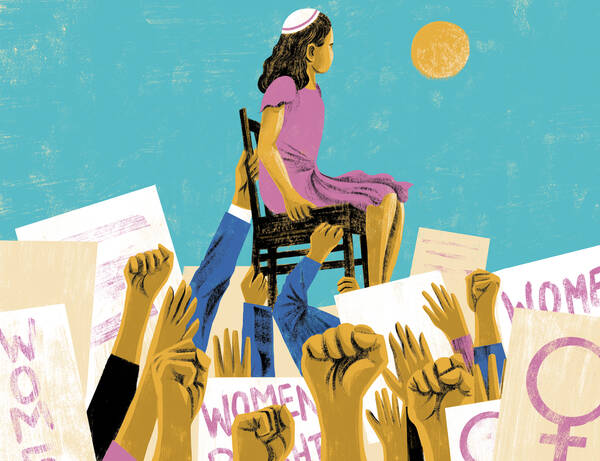 (undefined) The bat mitzvah, 100 years old this month, was a "landmark and steppingstone" for equality. By Menachem Wecker ● Read more » | | | | Perspective ● By Nana Osei-Opare and Thom Loyd ● Read more » | | |  Throughout the coronavirus pandemic, Latinos have been among the communities hit hardest from the health effects of the virus. On Monday, March 7 at 2:00 p.m. Eastern time, join Washington Post Live for conversations with Health and Human Services Secretary Xavier Becerra and Santa Ana Mayor Vicente Sarmiento about the lessons learned from the last two years and structural solutions for the future. By Washington Post Live ● Read more » | | | | By Sofía Aguilar March | Latina Media Co. ● Read more » | | | |



 Email
Email 

Comments
Post a Comment